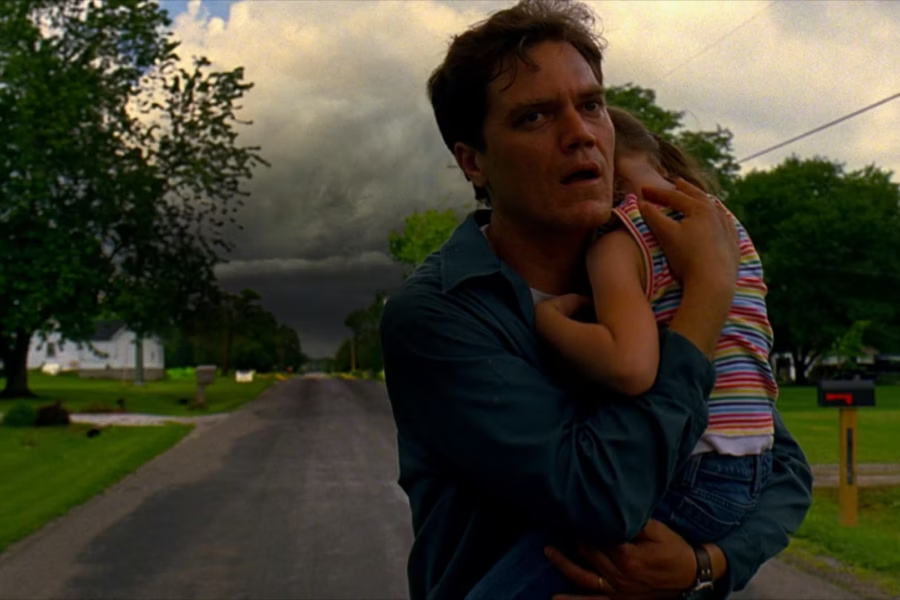
Jensen Huang Frames AI as a Powerful Force for Good

The rapid acceleration of artificial intelligence has ignited a wave of speculation, competition and existential concern, but according to Jensen Huang, one of the most influential voices in modern technology, the world is misunderstanding what this race truly looks like. In a wide-reaching conversation on The Joe Rogan Experience, Huang explained that the competition to shape AI’s future will not end with a single dramatic victory moment. Instead, he believes progress will unfold through continuous breakthroughs that accumulate quietly but powerfully over time—a perspective that has become central to discussions in nvidia ai news today and the global debate on technological leadership.

Huang drew comparisons between the current AI landscape and past eras defined by technological urgency, including the World War II arms race and Cold War defense innovation, but emphasized that AI moves at a far faster and more fluid pace. Rather than a grand finale, we are living through an era of relentless, compounding advancement.

How Jensen Huang Sees the Shape of the AI Future

During the interview, Huang argued that society tends to frame major innovations through the lens of dramatic historical turning points, imagining a definitive before-and-after moment—like the detonation of the first atomic bomb or the launch of Sputnik. Yet the modern AI race is different. The transformation occurring today is often invisible until hindsight reveals how profoundly life has changed. Technological revolutions do not always announce themselves with spectacle; many unfold quietly, woven into the fabric of everyday experience.

Huang pointed out that the capabilities of AI models have increased nearly one hundredfold within just the past two years. That pace of advancement is unprecedented, and even experts struggle to track the speed with which training efficiency, model scale and deployment capacity are evolving. He referenced a growing concern among researchers and policymakers that as AI becomes more autonomous—able to analyze complex data, make strategic decisions and operate critical systems—the potential risk grows if safety, oversight and long-term governance do not keep up.

Innovation and AI

Jensen Huang insisted that much of today’s progress is being directed precisely toward solving those questions. In his view, safety is no longer a secondary step but the primary driver of innovation. Systems are becoming more reliable, more interpretable and more aligned with human values. Rather than spiraling out of control, he argued, the field is maturing—moving from unpredictable experimentation to structured engineering. Critics fear a runaway technological spiral, but Huang countered that AI is becoming “more useful and less error-prone,” suggesting that the future of AI may be more stable and manageable than apocalyptic narratives imply.

He also addressed the controversial issue of military involvement in AI research. For many, the idea of defense agencies advancing AI systems evokes dystopian fears of autonomous weapons or state-powered machine decision-making. However, Huang offered a different perspective: government participation, particularly in national security, could create accountability rather than chaos. AI will inevitably shape defense strategy, he said, and the absence of formal oversight might open the door to dangerous development by unregulated organizations. Transparent military participation ensures that ethical frameworks, legal boundaries and public interest are part of the conversation. In that context, defense development becomes a safeguard, not a threat.

Throughout the conversation, Joe Rogan raised common anxieties that echo through popular culture: Will AI surpass human judgment? Could quantum computing render global encryption useless overnight? Might machine reasoning outrun human ethics? Huang rejected the more catastrophic visions and stressed that AI will remain “a click ahead,” meaning humans will always be close enough to monitor and direct progress. History is full of moments when society panicked over unfamiliar innovations—from electricity to radio to the internet—yet every time, regulations and cultural norms evolved to create balance. Fear, he suggested, is a constant companion of progress but rarely an accurate predictor of outcomes.

Impact of AI on Humans

He also envisioned a future where AI becomes so deeply embedded that people stop thinking about it altogether. Instead of a conscious entity, it will operate like electrical power—essential, invisible and dependable. In healthcare, AI may enable personalized diagnosis and treatment designed around genetic, behavioral and imaging data. In transportation, autonomous systems could dramatically reduce accidents and reshape mobility. In education, adaptive learning could tailor instruction to every student. In emergency response, AI could triage crises faster than human teams. The revolution may be less about robots replacing people and more about augmenting human capacity in ways that seem almost ordinary over time.

Significantly, Jensen Huang argued that no single nation or corporation will “win” AI. The idea of a final victory misunderstands how infrastructure technologies evolve. Global platforms such as electricity, telecommunications or the internet did not crown a lone champion; they dispersed across economies, industries and cultures. Innovation strengthens through collaboration and competition—not conquest. The race will not end in a finishing line photo; instead, it will continue indefinitely, shaping the world in layers too subtle for daily notice.

Conclusion: A Future Built on Shared Progress

Ultimately, Jensen Huang believes the future of AI will be defined not by dramatic domination but by quiet integration. Rather than a conquering superintelligence, AI will become a fundamental computing layer powering healthcare, transportation, research, security and everyday tools—largely unnoticed unless it fails. There will be no grand clash where one system or one country emerges triumphant. The real story, reflected in much of nvidia ai news today, is about collaboration, regulation and sustainable progress that supports humanity rather than threatening it. The race will continue indefinitely—not to crown a victor, but to ensure that future generations inherit technology that is stable, trustworthy and profoundly beneficial.

Smartphone Addiction: Why Your Brain Is Always Restless Now

If you’ve ever caught yourself tapping your phone without purpose, unlocking it to “check something” you can’t even name, or feeling a strange sense of responsibility toward your digital notifications, you’re not imagining things. In fact, what most people call smartphone addiction might be part of a deeper psychological loop — one surprisingly similar to those tiny 90s digital pets that demanded constant attention. This loop is so uncanny that psychologists now refer to it as the Tamagotchi effect, a behavioral phenomenon describing our tendency to emotionally bond with digital systems that mimic real-world neediness. So, is your smartphone secretly training you the way a Tamagotchi once trained a generation of kids? Let’s explore.


The Smartphone Addiction: A New Digital Conditioning Loop

Smartphones didn’t become indispensable overnight. They slowly morphed into attention-hungry machines designed to shape user behavior in subtle, almost invisible ways. What’s fascinating is how these devices create feedback loops that mirror the structure of outdated handheld digital pets — except now, the “pet” is far more intelligent, responsive, and intertwined with your identity. This blend of algorithms and behavioral design has fueled the rise of smartphone addiction, turning habitual usage into a conditioned response similar to feeding, cleaning, or nurturing a Tamagotchi.

One of the core principles behind this conditioning is variable reward scheduling, a psychological mechanism historically used in slot machines and game design. Instead of offering predictable rewards, apps employ unpredictable reinforcements — a message here, a like there, a random notification, a new follower, a surprise discount. This unpredictability keeps users engaged far more effectively than consistent rewards ever could. The brain becomes primed for the next hit of dopamine, the next digital pat on the back. Over time, users internalize this cycle, often without realizing how deeply their habits are shaped by these micro-mechanics. That’s where the modern version of the Tamagotchi effect comes in.

What makes the comparison even more striking is the illusion of responsibility. Just as a Tamagotchi “needed” feeding or cleaning, your apps constantly signal that something awaits you: “You missed a message,” “There’s a sale,” “Your streak is about to end,” “You haven’t checked in today.” These cues tap into the same behavioral circuits that once made us obsessively care for pixellated creatures. This subtle emotional attachment — though irrational — becomes one of the primary drivers of smartphone addiction. And unlike a toy from the 90s, your phone is connected to every aspect of your life: social validation, work updates, entertainment, banking, dating, health, even security.

Are We Training Our Phones, or Are Our Phones Training Us?

Another powerful layer is personalization. Your smartphone adapts to your behavior, tailoring content and notifications to your emotional patterns. Social media algorithms study your pauses, clicks, and scrolls to craft a digital environment that feels almost alive in its responsiveness. This adaptive interaction amplifies the bond further, reinforcing the sense that your device “knows you,” making it harder to differentiate between conscious engagement and conditioned behavior. This personalization strengthens the loop of smartphone addiction by making every digital ping feel relevant, urgent, and designed specifically for you.

But perhaps the most revealing comparison lies in how users now experience withdrawal. Misplacing your phone, forgetting it at home, or running out of battery can trigger anxiety, irritation, or genuine discomfort — emotions once experienced when a Tamagotchi died because you forgot to feed it. This mild panic isn’t about utility; it’s about the disruption of a behavioral pattern your brain has become conditioned to follow.


The Tamagotchi Effect in the Digital Age Explained

At the heart of this psychological dance is a reversal of roles. We believe we are the ones “training” our devices — customizing them, teaching them preferences, setting reminders, choosing apps. Yet, beneath that illusion runs a sophisticated system that is training us far more effectively. Notifications dictate when we return. Badges and streaks motivate us. Vibration patterns nudge us. Subtle interface designs guide our decisions.

This dynamic has created a world where our attention is the currency, our time is the product, and our emotional responses are the output. The more we interact, the more refined the conditioning becomes. While a Tamagotchi was a simple novelty, your smartphone is a psychologically engineered ecosystem, designed to foster habitual dependence at a scale never seen before.


Conclusion

So, is your smartphone secretly training you the way those tiny digital creatures once did? The answer leans toward yes — only now the system is far more refined, far more personalized, and far more invested in keeping you hooked. As we navigate a world shaped by smartphone addiction, understanding how the Tamagotchi effect plays into our digital habits gives us the power to reclaim control. Awareness is the first step toward breaking the loop — and remembering that the real human in this equation is you, not the device that demands your attention.

Scream Movies Obsession? These 25 World Slashers Go Even Darker

Slashers have maintained their place as a favourite sub-genre of horror cinema, thanks to their blend of tension, mystery, nerve-wracking chases, and masked killers with haunting motives. While the world loves the wild meta-horror ride of the scream movies, international cinema has also produced some truly remarkable slashers that match (and sometimes surpass) the twists, tension, and creative kills of American classics. This list brings together 25 best international slasher movies like Scream, blending cult favourites, modern masterpieces, and underrated gems that deserve a wider audience.


Why the World Still Loves Slasher Films

The appeal of slashers lies in how they exploit our most primal fears—being watched, chased, or hunted. They are also deeply cinematic, mixing sharp editing, moody lighting, and emotional intensity. Many international filmmakers, inspired by classics like the scream movies, have taken the formula and built thrilling, culturally unique versions that push the genre into surprising places.


Top 25 Best International Slashers Like the Scream Movies

Below are the 25 best slasher films from across the globe, each offering suspense, dread, and unforgettable killers. Some lean into pure slasher style, while others fuse slasher elements with the atmosphere associated with psychological thriller movies—giving you the best of both worlds.


1. High Tension (France, 2003)

One of the most intense French slashers ever made, High Tension follows two friends on a weekend trip that becomes a nightmare when a brutal killer invades the house. It’s visceral, relentless, and carries a twist that positioned it alongside the best thriller movies on netflix in terms of pacing and shock value.


2. Cold Prey (Norway, 2006)

A group of snowboarders seek refuge in an abandoned hotel, only to find themselves hunted. Norway’s biggest slasher with scream movies vibe delivers stunning icy landscapes and a terrifying antagonist.


3. The Orphanage (Spain, 2007)

Although often labeled supernatural, the film uses slasher-style reveals, suspense, and chilling villain setups. Its emotional depth makes it cross into the territory of psychological thriller movies while maintaining classic horror tension.


4. Terrified (Argentina, 2017)

While primarily supernatural, it has several slasher-like sequences involving mysterious intruders and horrifying physical attacks, executed with perfect timing and dread.


5. The Vanishing (Netherlands, 1988)

Not a traditional slasher, but its villain’s methodical, chilling approach to kidnapping embodies the spirit of character-driven horror—an influence modern slashers, from Europe to Asia, draw from.


6. Them (France/Romania, 2006)

A couple isolated in the countryside face unknown masked assailants in this nerve-shredding real-time thriller. Its atmosphere shares DNA with the scream movies, but with a raw, documentary-style touch.


7. A Tale of Two Sisters (South Korea, 2003)

A slow-burn psychological horror with slasher-like reveals and violent sequences. The killer’s identity and backstory are tightly layered, making it fit naturally among psychological thriller movies.


8. The Call (South Korea, 2020)

A time-bending slasher where a woman communicates with someone dangerous from the past. The killings escalate unpredictably, and the villain becomes one of the scariest modern female slashers in global cinema.


9. I Saw the Devil (South Korea, 2010)

A brutal cat-and-mouse revenge thriller that goes far deeper—and darker—than typical slashers. The killer is unforgettable, and the set pieces are masterfully choreographed.


10. The Clown Murders (Canada, 1976)

An early Canadian cult slasher featuring masked killers and chaotic chases, offering a gritty, retro charm.


11. Rabid (Canada, 1977)

David Cronenberg’s body-horror slasher hybrid, filled with violent outbreaks and random attacks. Its unpredictability keeps tension high.


12. The House at the End of Time (Venezuela, 2013)

While leaning supernatural, its suspense and attack sequences echo slasher tropes—traps, reveals, and deadly confrontations.


13. The Ritual (UK, 2017)

Survival horror with slasher undertones as a malevolent entity picks off a group of friends one by one. Its forest setting is deeply atmospheric.


14. Eden Lake (UK, 2008)

A horrifying slasher-survival hybrid where a couple is hunted by violent teenagers. It’s gritty, emotionally devastating, and incredibly tense.


15. Severance (UK, 2006)

A slasher infused with dark comedy, where corporate employees face deadly traps. Gore, humor, and surprising kills make it stand out.


16. Audition (Japan, 1999)

One of the most disturbing Japanese films ever made, with a shocking final act that channels the brutality of high-stakes slashers. It’s also iconic within psychological thriller movies discussions.


17. Tag (Japan, 2015)

A surreal, violent slasher where the protagonist faces a series of violent realities. It’s stylish, symbolic, and filled with inventive kill sequences.


18. Confessions (Japan, 2010)

More psychological than traditional slasher, yet its revenge-driven violence and emotional brutality give it a slasher-like edge.


19. The Reef (Australia, 2010)

Although centered around a shark, the tension and structure mirror classic stalk-and-kill slashers. Nature becomes the masked killer here.


20. Wolf Creek (Australia, 2005)

A violent, unsettling outback slasher inspired by true events. The villain is one of the most horrifying killers in modern horror.


21. Hush (USA, 2016)

While American, this is a globally loved modern slasher set in near-silence. A deaf writer battles a masked killer in a tense, minimalist setting.


22. The Strangers (USA, 2008)

Also American but widely popular internationally, this home-invasion slasher is known for its eerie masks and chilling randomness. The suspense rivals many of the best thriller movies on netflix.


23. Cherry Falls (USA, 2000)

Another American entry with cult international appeal. A killer targets virgins, flipping genre conventions in a way reminiscent of the sharp wit seen in the scream movies.


24. Inside (France, 2007)

A French home-invasion slasher that is brutally violent and unflinchingly intense. The villain is terrifying and unforgettable.


25. Martyrs (France, 2008)

Not a traditional slasher, but its violence, pacing, and shocking twists fit the slasher-adjacent horror category. The brutality and emotional stakes are immense.


How These Films Match the Intensity of the Scream Movies

International filmmakers often take slasher tropes—masked killers, final girls, urban legends—and incorporate cultural elements or genre blends. Many adopt mystery-driven plots similar to the scream movies, while others lean into brutality, atmosphere, or psychological depth.

Together, these films show how global cinema has helped evolve slashers—from witty meta-horror to darkly atmospheric thrillers often listed among the best thriller movies on netflix.


Where to Watch: OTT Platform Breakdown

#Movie TitleTypical OTT Platform(s) (where commonly found)IndiaUSUK
1High Tension (Haute Tension)Prime Video / Rent channels (varies)Varies / Rent/Buy. (JustWatch)Yes (Prime / MovieSphere+/rent). (JustWatch)Yes (Prime / JustWatch shows UK listings). (JustWatch)
2Cold Prey (Norske filmer)Prime Video / Viaplay / RentNot commonly on subscription in India (often No / Rent). (JustWatch)Yes (available on certain services / rent in US regions). (Letterboxd)Varies — often No / Rent in UK. (JustWatch)
3The Orphanage (El Orfanato)Prime Video / Paramount+ / RentVaries — often Rent/Buy in India. (JustWatch)Yes (Prime / rent options widely available). (Moviefone)Yes (Prime listings / Paramount in some regions). (JustWatch)
4Terrified (Aterrados)Shudder / AMC+ / RentNot widely on subscription in India (often No / Rent). (JustWatch)Yes (Shudder / AMC+). (JustWatch)Yes (Shudder in UK regions where Shudder operates). (JustWatch)
5The Vanishing (Spoorloos / 1988)Mubi / Criterion / RentVaries by region — often Mubi / Rent.Varies / Rent or specialty services (Mubi/Criterion).Yes (Mubi / specialty).
6Them (Ils)Prime Video / RentVaries — often Rent/Buy.Yes (Prime / rental historically).Yes (Prime/other services historically).
7A Tale of Two Sisters (Korean, 2003)HBO Max / Rent / Curated platformsVaries — often Rent/Buy in India.Yes (HBO Max or rent depending on window).Varies (catalog rotations).
8The Call (Korean, 2020)Netflix (region-dependent)Yes — Netflix India (in many windows). (JustWatch)Yes — Netflix US in some windows (rotates).Yes — Netflix UK (rotates).
9I Saw the Devil (Korean, 2010)Prime Video / Peacock / RentYes — Prime India sometimes shows it (region-dependent). (JustWatch)Yes (Peacock / Prime / rent in US historically). (JustWatch)Yes (Prime / rent options). (JustWatch)
10The Clown Murders (Canada)Rent / Archive servicesNo / Rent (rare on subscription).No / Rent (rare).No / Rent (rare).
11Rabid (Cronenberg)Prime Video / Shudder / RentVaries — usually Rent/Buy in India.Often Rent/Buy; appears on specialty horror rotations.Varies — specialty/curated platforms or rent.
12The House at the End of TimeMubi / RentVaries — Mubi in some regions; Rent otherwise.Varies / Rent or Mubi (where available).Yes on Mubi in several regions.
13The RitualNetflix / RentVaries — Netflix India intermittently.Yes — has been on Netflix US (rotates).Yes — Netflix UK at times.
14Eden LakePrime Video / RentVaries — often Rent/Buy in India.Yes (rent/Prime in US historically). (Moviefone)Yes (Prime Video / rental). (Moviefone)
15SeveranceShudder / VOD (film, not to be confused with TV series)Varies / Rent — appears on Shudder in some regions.Yes (Shudder / specialty). (JustWatch)Yes (Shudder where available).
16Audition (Takeshi Miike)Prime Video / RentYes — Prime India has listed Audition in some windows. (JustWatch)Yes — Prime / rent in US.Yes — Prime / rent in UK.
17Tag (Japan)Shudder / Curated festivals / RentNo / Rent (rare on mainstream India platforms).Varies — Shudder / festival streams / rent.Varies — festival runs / Shudder in some regions.
18Confessions (Kokuhaku)HBO Max / Curated / RentVaries — usually Rent/Buy in India.Yes (HBO Max / rent in US historically).Varies (platform rotations).
19The ReefPrime Video / Netflix (region-dependent)Varies — Rent/Buy in India.Yes (has been on Netflix/Prime regionally).Varies (rent/Prime).
20Wolf CreekPrime Video / AMC / RentVaries — often Prime (rent/buy) in India.Yes (Prime / rent historically).Yes (Prime/other services historically).
21HushNetflix (varies) / RentVaries by catalog — Netflix India has carried Hush at times.Yes — Netflix US in some windows.Yes — Netflix UK at times.
22The StrangersHBO Max / Paramount / RentVaries — often Rent/Buy in India.Yes (Paramount/HBO Max / rent historically).Yes (Paramount/stream rotations).
23Cherry FallsRent / Niche catalogsNo / Rent — rare on Indian subscription services.Varies — often Rent/Buy in US.Varies — rent or niche catalog.
24Inside (À l’intérieur, 2007)Prime Video / Shudder / RentVaries — Rent/Buy in India (rare on subscription).Yes — Amazon/Prime/rental windows in US.Yes — Prime/other services historically.
25MartyrsShudder / Criterion / RentVaries — Rent/Buy in India; appears on specialty services.Yes — Shudder / Criterion Channel / rent historically.Yes — specialty platforms / rent.


Conclusion

From Europe to Asia to Latin America, slasher cinema has evolved into a global phenomenon. While audiences still adore the wit, pacing, and masked terror of the scream movies, international filmmakers have crafted their own unforgettable experiences—some bloody, some psychological, some atmospheric, all thrilling. These 25 titles offer a world of scares, twisted killers, and unforgettable suspense scenes that will satisfy any fan of slashers, psychological thriller movies.

Best Non-Hollywood Thrillers with John Wick Movies Spirit

Action-thrillers in the 2020s have evolved dramatically. The decade has delivered movies packed with kinetic choreography, neon-drenched cityscapes, moral ambiguity, stoic assassins, cold-hearted mercenaries, and stylish brutality—everything fans usually associate with John wick movies. While Hollywood continues to dominate the genre, a significant wave of international thriller filmmaking has risen to the surface, offering jaw-dropping action sequences, complex villains, and heart-pounding narratives.

This list celebrates 20 international thriller movies from the 2020s that replicate the adrenaline, world-building, and emotional darkness reminiscent of John Wick while still maintaining their unique cultural identity. Some lean heavily into martial arts, others dive deep into noir, while a few blend the tension of psychological thriller movies with the gun-fu aesthetic that fans love. Together, they redefine modern action cinema and cement the 2020s as a golden era for global thrillers.


1. The Killer (South Korea, 2022)

This stylish South Korean assassin thriller blends crisp choreography with ruthless efficiency. The story of a retired hitman forced back into the underworld to protect a teenager, it mirrors the stoicism and moral fog found in John wick movies. What makes it stand out is its balletic close-quarter combat and charismatic lead performance.


2. Carter (South Korea, 2022)

Shot almost entirely to look like a single take, this adrenaline-shot thriller is a technical marvel. Filled with motorcycles, helicopters, and non-stop chases, Carter never allows viewers to breathe. Its chaotic violence and relentless pace place it firmly among the best thriller movies of the decade.


3. The Roundup: No Way Out (South Korea, 2023)

Ma Dong-seok returns with bone-crunching hand-to-hand combat, delivering raw brutality mixed with dark humor. While not purely assassin-focused, its intimidation factor and street-level justice echo the gritty spirit of John Wick.


4. Yaksha: Ruthless Operations (South Korea, 2022)

A blend of espionage and noir, Yaksha follows a special forces commander navigating double-crosses in a spy-infested Asian city. Its shadowy visuals, conspiracies, and fluid gun fights draw inspiration from international action thriller tropes, especially those in the best thriller category.


5. Kill Boksoon (South Korea, 2023)

A female assassin attempting to balance motherhood and contract killings, Boksoon’s dilemma brings emotional depth to ultraviolent storytelling. With stylized world-building similar to John Wick, it introduces fascinating guild rules, codes of conduct, and assassin hierarchies.


6. The Man from Rome (Spain/Italy, 2022)

A European thriller infused with religious conspiracies and covert operations, this movie blends cerebral mystery with brutal combat. Its atmosphere appeals strongly to fans of psychological thriller movies, especially those who enjoy mood-heavy storytelling with sudden bursts of action.


7. Sisu (Finland, 2023)

This Finnish cult hit follows a lone miner who fights Nazis with the ferocity of a mythic warrior. Its breathtaking landscape shots, hyper-violence, and indestructible protagonist make it feel like a Nordic cousin to John wick movies—silent, relentless, unstoppable.


8. Salaar: Part 1 – Ceasefire (India, 2023)

Prabhas stars in this Indian mega-thriller filled with brooding atmosphere, stunning world-building, and large-scale action choreography. Its tale of loyalty and vengeance mirrors the operatic emotional tones often found in psychological thrillers, though delivered through high-powered action.


9. Kill (India, 2024)

Directed by Nikhil Nagesh Bhat, the film transforms a routine train journey into a brutal battleground, where two soldiers face off against a violent gang of bandits in a claustrophobic, blood-soaked fight for survival. With relentless pacing, bone-crushing action choreography, and a gripping emotional core, Kill stands out as one of the boldest and most explosive Indian action films of the decade.


10. Lost Bullet 2 (France, 2022)

Known for its practical car stunts and explosive pacing, Lost Bullet 2 takes Euro-action to the next level. Its raw physicality, sharp editing, and underdog storyline reflect the gritty determination common in John wick movies.


11. Baaghi 3 (India, 2020)

An Indian high-octane thriller with massive action set pieces, helicopters, tank battles, and relentless rescue missions. The kinetic energy and lone-hero narrative are reminiscent of how John Wick place a single man against an impossible army.


12. Eye for an Eye (China, 2022)

This Chinese revenge thriller offers slick cinematography and smart pacing. Its protagonist, a former police officer with a dark past, embodies the driven antihero archetype that dominates the best thriller movies list worldwide.


13. Ballerina (South Korea, 2023)

Ballerina is a stylish and emotionally charged South Korean revenge thriller that blends neon-lit visuals with razor-sharp action choreography. Following a former bodyguard on a ruthless quest to avenge her best friend, the film channels the sleek brutality and focused rage often seen in John wick movies, while still delivering its own bold, artistic identity.


14. Project Wolf Hunting (South Korea, 2022)

A hybrid between action, horror, and high-tension thriller, set on a cargo ship full of the world’s most dangerous criminals. Ultra-violent, relentless, and uniquely Korean.


15. Centauro (Spain, 2022)

Centauro is a fast, fuel-injected Spanish action thriller that follows a fearless biker forced into the criminal underworld to protect the people he loves. Blending high-speed motorcycle stunts with gritty street-level tension, the film delivers the kind of raw adrenaline rush that fans often associate with the best thriller movies, while maintaining its own stylish Mediterranean edge.


16. One More Shot (UK, 2024)

A British one-take action thriller starring Scott Adkins, this film delivers raw, immersive combat scenes. If John Wick is known for fluid motion and precision, One More Shot deserves recognition for its continuous momentum.


17. AKA (France, 2023)

A gritty French thriller about an undercover agent torn between loyalty and justice, AKA balances emotional depth with ruthless action. Its morally flawed protagonist makes it good fit among the best action movies of the decade.


18. Pigs and Battleships: Reborn (Japan, 2024)

This modern Japanese noir thriller revisits the gangster underworld with a fresh, violent twist. Stylish slow-motion action and neon-drenched visuals give it a look that fans of John wick movies immediately connect with.


19. Moscow Noir (Russia, 2023)

This Russian underworld thriller combines stylish assassinations, mafia politics, and cold, atmospheric cinematography. Its bleak tone and tactical combat sequences strongly resemble European versions of the John Wick universe.


20. The Fable: The Killer Who Doesn’t Kill (Japan, 2021)

A wildly entertaining Japanese action thriller about a legendary hitman trying to live a peaceful life—until his past comes back swinging. Stylish, clever, and full of inventive set pieces.


How John Wick Movies Created a Global Action Trend

The 2020s have become one of the strongest decades for international thrillers, delivering a marriage of artistic ambition, intense choreography, and emotionally layered antiheroes. These films don’t just imitate the style of John wick movies—they expand the genre, innovate it, and enhance global cinematic language. Whether they lean more toward action-heavy plots or carry shades of psychological thriller movies, they prove that high-octane cinema is no longer limited by language or geography.

The thrillers listed above demonstrate that global filmmakers are pushing boundaries harder than ever. As Hollywood grows more formulaic, these international productions inject new energy into the genre, ensuring that fans across the world are fed a steady diet of innovation, urgency, and stylish vengeance.

20 International Horror Movies with The Evil Dead Vibe

Horror cinema underwent a chilling global evolution in the 2000s. Across Asia, Europe, and South America, filmmakers experimented with folklore, psychological fear, and relentless brutality. These trend-setting films not only reshaped the genre but also carried the rebellious, raw spirit once embodied by The Evil Dead, blending supernatural terror with gritty realism. In this list of 20 international horror masterpieces, you’ll explore what made each movie unforgettable, their ratings, and the signature twists that carved them into horror history.


1. A Tale of Two Sisters (2003) – South Korea

Rating: 8/10
This slow-burn psychological horror redefined Korean storytelling with its elegant dread. The film’s mix of hallucination, trauma, and supernatural presence forms a beautiful yet disturbing puzzle. Its unique narrative structure gives it a haunting rewatch value, making it one of the best horror movies of its time.


2. Rec (2007) – Spain

Rating: 8.3/10
A horror milestone shot entirely from a reporter’s shaky camera, Rec traps viewers inside a quarantined Barcelona apartment building. Its real-time panic, claustrophobic tension, and demon-infected residents make it one of the most immersive found-footage films ever created.


3. The Orphanage (2007) – Spain

Rating: 8/10
This supernatural drama stands out for its emotional depth. Using shadows, whispers, and childlike silhouettes, it weaves a story where grief is the real monster. The film’s gothic atmosphere is reminiscent of The Evil Dead in its use of old spaces that feel alive.


4. Inside (À l’intérieur) (2007) – France

Rating: 7.8/10
A violent and disturbing entry in the French New Extremity movement, Inside delivers intense home-invasion terror. Its relentless brutality is not for the faint-hearted. The villain’s eerie calmness makes the carnage feel far too real, giving the film its infamous edge.


5. The Host (2006) – South Korea

Rating: 8.5/10
A monster movie with heart, The Host blends political satire, family drama, and terrifying creature design. Its unique blend of humor and horror set a new standard for creature features and inspired many modern films that push genre boundaries.


6. Martyrs (2008) – France

Rating: 8.1/10
A philosophical horror film masked as a torture-horror experience. Martyrs explores trauma, transcendence, and the darkest corners of human endurance. Brutal yet profound, this French shocker raised existential questions rarely approached in the genre.


7. [•REC] 2 (2009) – Spain

Rating: 7.5/10
Expanding the universe of the first film, this sequel adds religious horror to the viral outbreak narrative. The demonic mythology elevates the fear, making it feel like a spiritual successor to the frantic chaos seen in The Evil Dead.


8. Shutter (2004) – Thailand

Rating: 7.7/10
Arguably one of Asia’s scariest ghost stories, Shutter blends photography with supernatural mystery. The spine-chilling reveal, combined with eerie visual tricks, continues to inspire horror filmmakers globally.


9. The Babadook (2009) – Australia

Rating: 8.2/10
A psychological monster born from grief, The Babadook creeps into the mind more than the home. Its minimalistic design and emotional depth build a new kind of horror—one that lingers long after the credits roll.


10. The Descent (2005) – UK

Rating: 8.5/10
This claustrophobic nightmare takes place inside an uncharted cave system crawling with humanoid predators. Its all-female cast, raw tension, and suffocating atmosphere make the fear almost physical, calling back to the raw terror of The Evil Dead.


11. Let the Right One In (2008) – Sweden

Rating: 8.4/10
A poetic blend of horror and heartbreak, this Swedish vampire tale elevates the genre with tenderness and violence. The icy cinematography enhances its melancholic tone, making it a modern classic.


12. 28 Weeks Later (2007) – UK & Spain

Rating: 7.9/10
A brutal and fast-paced sequel, this movie introduced some of the most terrifying opening scenes in zombie history. Its bleak tone and social commentary give it a realism that’s deeply unnerving.


13. Pulse (Kairo) (2001) – Japan

Rating: 7.4/10
One of Japan’s most existential horror films, Pulse examines loneliness through ghosts invading the digital world. Its atmospheric dread and slow decay of society mirror early apocalyptic fears of the internet age.


14. Ju-On: The Grudge (2002) – Japan

Rating: 7.7/10
More fragmented and experimental than other ghost stories, this film uses nonlinear storytelling and unnerving sound design to create pure terror. The creepy house functions almost like the haunted cabin in The Evil Dead—a location that becomes the villain itself.


15. The Wailing (2009) – South Korea

Rating: 8.6/10
This supernatural crime-horror hybrid blends shamanism, possession, and mystery. The film’s unpredictability and cultural richness make it a standout in global horror cinema.


16. Cold Prey (2006) – Norway

Rating: 7.3/10
A beautifully shot slasher film set in icy mountains. Its grounded approach, strong characters, and chilling antagonist turn classic genre tropes into something sharp and modern.


17. Calvaire (2004) – Belgium

Rating: 7.5/10
This disturbing psychological horror follows a traveling performer trapped by a deranged innkeeper. The film’s bleak landscape, madness, and surreal scenes make it uniquely disorienting.


18. Wolf Creek (2005) – Australia

Rating: 7.6/10
Loosely inspired by true events, Wolf Creek pushes survival horror into painfully realistic territory. The villain’s sadistic personality and the Australian outback’s oppressive emptiness create unforgettable dread.


19. The Devil’s Backbone (2001) – Mexico & Spain

Rating: 8.3/10
Directed by Guillermo del Toro, this gothic ghost story combines war trauma with supernatural imagery. The film’s atmospheric suspense and tender storytelling blend emotional depth with historical horror.


20. Frontier(s) (2007) – France

Rating: 7.2/10
A violence-filled, politically charged horror film about a group of youths who face a deranged neo-Nazi family. The intense gore, social commentary, and relentless energy resemble the groundbreaking chaos of The Evil Dead.


Why These Films Still Matter

The 2000s reshaped the global horror landscape by introducing bold storytelling, extreme emotions, and innovative filmmaking. Whether it was Japan redefining supernatural terror, France pushing shock boundaries, or Korea blending folklore with modern fear, the decade produced a collection of cinema that continues to inspire filmmakers. Many of these movies echo the rebellious spirit of The Evil Dead, which embraced creativity, low-budget innovation, and raw terror to craft a cult legacy.

As fans still debate the best horror movies of the decade, these international gems stand tall for their originality and fearless approach. But beyond scares, each film carries cultural textures, emotional depth, or narrative daring that helped the genre evolve.

Final Thoughts

For viewers seeking the same visceral thrill that The Evil Dead once delivered, these 20 films offer a gateway into some of the most unforgettable cinematic nightmares crafted in the 2000s. From demonic possession to survival horror, supernatural mysteries to psychological torment, this list explores every shade of fear—proving why this era remains one of the strongest chapters in horror cinema.

And while many modern fans flock to the best horror movies suggested by popular streaming platforms, diving into these international masterpieces reveals the true diversity and daring spirit of 21st-century fear.

Best Action Movies of the 2010’s That Redefined Cinema

The 2010s delivered a wave of gritty international crime thrillers that combined global espionage, sharp storytelling, and ruthless character arcs reminiscent of Charles Bronson’s Mechanic. These films pushed the boundaries of realism, introduced unforgettable anti-heroes, and raised the bar for intense, grounded action. Many of them remain fan favorites for audiences searching for the best action movies with a criminal underworld twist. From South Korean neo-noir masterpieces to French heist thrillers and Scandinavian crime dramas, the last decade produced some of the most unforgettable titles the genre has ever seen.

Below are 20 standout international crime films of the 2010s that offer the same cold precision, dark tone, and high-stakes violence you’d expect from Bronson-style storytelling.


1. The Man from Nowhere (2010) – South Korea

A former black-ops agent is pulled back into the underworld when a young girl he cares about is kidnapped. Brutal knife combat, emotional depth, and stellar pacing make this one of the best action movies of the decade.

2. A Prophet (2010) – France

Gritty, slow-burn, and brilliantly acted, this prison-gang crime saga follows a young Arab man rising through the ranks of a violent Corsican mob. It exemplifies mature European crime storytelling.

3. Elite Squad: The Enemy Within (2010) – Brazil

An explosive look at government corruption, police violence, and organized crime in Rio. Its high-intensity shootouts rival major Hollywood productions.

4. Headhunters (2011) – Norway

A corporate recruiter who moonlights as an art thief gets hunted by a relentless ex-mercenary. Stylish, clever, and darkly humorous.

5. Drug War (2012) – China / Hong Kong

Johnnie To’s intense and tightly directed thriller explores a detective’s quest to infiltrate a drug cartel. Its realism and suspense make it one of the best action movies in Asian crime cinema.

6. The Raid: Redemption (2011) – Indonesia

A tactical team storms a crime-infested high-rise, facing lethal hand-to-hand combat. It redefined martial-arts action globally.

7. The Raid 2 (2014) – Indonesia

A deeper dive into the Indonesian underworld, mixing gang politics with jaw-dropping choreography. Many fans consider it superior to the first.

8. Victoria (2015) – Germany

Shot in a single continuous take, the film follows a young woman pulled into a dangerous heist gone wrong. Its real-time intensity is unmatched.

9. The Night Comes for Us (2018) – Indonesia

One of the most violent films of the decade. A former Triad assassin betrays his gang to protect a child, triggering chaos across Jakarta.

10. The Invisible Guest (2016) – Spain

A murder mystery wrapped in betrayal and corporate crime. Sharp writing keeps viewers guessing until the final reveal.

11. Bastille Day (2016) – France / UK

With high-speed pursuits and international espionage, this Paris-set thriller delivers slick action as an agent tracks a conspiracy behind a bombing.

12. Headshot (2016) – Indonesia

Iko Uwais plays an amnesiac man connected to a violent gang. The bone-crunching action has gained cult status among fans of the best action movies.

13. Cash Only (2015) – Albania / USA

A debt-ridden landlord becomes entangled with brutal loan sharks. Raw acting and documentary-style realism make this a hidden gem.

14. Son of a Gun (2014) – Australia

A young convict forms an alliance with a notorious armed robber. Their high-stakes gold heist echoes the criminal precision of The Mechanic.

15. The Yellow Sea (2010) – South Korea

An intense crime thriller about desperate survival, cross-border assassins, and mob betrayal. The chase sequences are legendary.

16. Point Blank (2010) – France

A nurse must work with a dangerous criminal to rescue his kidnapped wife. This tight, relentless thriller inspired several remakes.

17. New World (2013) – South Korea

A deep undercover officer becomes torn between loyalty and justice as he infiltrates a powerful mafia organization. Its slow-burn tension is masterful.

18. Sleepless Night (2011) – France

A corrupt detective races through a nightclub labyrinth to save his kidnapped son. Nonstop pressure, confined spaces, and gritty realism define it.

19. Cold Pursuit (2019) – Norway/USA remake roots

Though Americanized, its roots lie in the Norwegian original In Order of Disappearance (2014). Both versions combine dark humor with a revenge-driven narrative.

20. The Guilty (2018) – Denmark

A police officer demoted to emergency dispatch tries to save a kidnapped woman using only phone calls. Minimalist, gripping, and emotionally powerful.


Why These Crime Thrillers Still Stand Out Today

The international crime films of the 2010s brought fresh perspectives to the genre. Many of these movies originated outside the Hollywood system, offering:

  • raw, unfiltered violence grounded in realism
  • morally complex characters
  • cultural authenticity
  • innovative filming styles
  • handcrafted fight choreography

While Hollywood has its own library of the best action movies, this international wave provided a refreshing contrast—proving that compelling action doesn’t require massive budgets, just strong storytelling and bold direction.

Many of these titles have become fan favorites for viewers searching for intense action movies on netflix, especially as streaming platforms began acquiring more non-English content throughout the decade. With global accessibility rising, audiences embraced crime movies from Indonesia, South Korea, Norway, and France more than ever before.


What Makes These Films Similar to Charles Bronson’s Mechanic

The Mechanic is known for its calculated violence, loner anti-hero, and clean execution of missions. The films above share similar traits:

Cold, precise protagonists

Characters in The Man from Nowhere, Drug War, and Son of a Gun show the same quiet ruthlessness that Bronson embodied.

Tactical violence

Like The Mechanic, these films emphasize efficiency over stylization. The choreography in The Raid series and Headshot stands out in particular.

Criminal underworld setting

Whether it’s the Triads, mafias, or mercenaries, these stories build rich and dangerous ecosystems.

Moral grey zones

Most of the protagonists are not traditional heroes; they’re survivors, criminals, or reluctant fighters.

Such elements make these films some of the best action movies for fans of gritty crime thrillers that avoid clichés.


How to Watch These Movies Today

Because many of these titles have gained cult status, they frequently rotate onto streaming platforms. Several are currently available on netflix, especially Asian thrillers and European crime mysteries. As the demand for global cinema continues to rise, Netflix and similar platforms keep expanding their international thriller library.


Final Thoughts

The 2010s were a defining decade for global crime cinema. From the ferocity of Indonesian action to the psychological depth of Korean noir and the gritty realism of French thrillers, this era introduced some of the best action movies ever crafted outside Hollywood. Their influence can be felt today as streaming platforms highlight more international content and fans search for grounded, high-intensity crime sagas that avoid predictable formulas.

Whether you’re exploring unconventional heist films, violent gang dramas, or atmospheric mysteries, the movies on this list offer unforgettable journeys into the shadows of the criminal world. Many have become favorites among fans looking for action movies on netflix, and all are excellent choices for anyone who loves sharp, uncompromising cinematic action.

20 Best Thriller Movies of the 80s

The 1980s was a golden decade for suspense, mystery, and adrenaline-charged storytelling. Filmmakers experimented boldly with style, atmosphere, and character psychology, shaping films that still influence modern thrillers. Many of the best thriller movies from this decade remain benchmarks for tight pacing, unforgettable performances, and mind-bending twists. This list revisits 20 cinematic gems, exploring their impact, legacy, and ratings—making it a valuable guide for both long-time fans and new viewers.


The Evolution of thriller movies in the 80s

The 80s transformed the thriller genre with noir influences, political anxieties, neo-futuristic visuals, and deeply psychological narratives. While today’s audiences often look for psychological thriller movies on netflix, the foundations of many streaming-era masterpieces can be traced back to these iconic releases.


1. Blade Runner (1982)

Rating: 8.9/10
Ridley Scott’s dystopian noir challenges viewers with questions about identity and humanity. Its atmospheric world-building and philosophical undertones make it eternally memorable.

2. The Shining (1980)

Rating: 9.1/10
Stanley Kubrick’s psychological descent into madness remains a masterclass in tension. Jack Nicholson’s spine-chilling performance elevates it into one of the best thriller movies ever crafted.

3. The Untouchables (1987)

Rating: 8.5/10
Brian De Palma blends gangster drama with sharp suspense. The iconic train-station scene still lives rent-free in pop culture.

4. Blue Velvet (1986)

Rating: 8.7/10
David Lynch’s nightmarish film explores the darkness beneath suburban life. A predecessor to many modern psychological thriller movies on netflix, it remains hauntingly unforgettable.

5. The Vanishing (1988)

Rating: 8.6/10
A Dutch masterpiece focusing on obsession and the terror of the unknown. The ending alone solidified its cult status.

6. Witness (1985)

Rating: 8.3/10
Harrison Ford stars in this tense thriller about corruption and Amish life. Its blend of cultural contrast and crime drama makes it uniquely gripping.

7. Manhunter (1986)

Rating: 8.2/10
Michael Mann brings stylish coolness to the first adaptation of Hannibal Lecter. Its neon-soaked visuals influenced countless later works.

8. The Thing (1982)

Rating: 8.8/10
John Carpenter’s paranoia-filled sci-fi thriller is beloved for its groundbreaking practical effects and nerve-shattering atmosphere.

9. Fatal Attraction (1987)

Rating: 7.9/10
A cautionary tale of obsession gone wrong. Glenn Close delivers one of the decade’s most unforgettable performances.

10. Runaway Train (1985)

Rating: 8.1/10
A philosophical and intense thriller set aboard a speeding train. The relentless tension makes this a standout of the decade.

11. The Killing Fields (1984)

Rating: 8.6/10
A political thriller based on real events in Cambodia. Its emotional weight and exceptional performances make it historically significant.

12. RoboCop (1987)

Rating: 8.4/10
Though often labeled sci-fi, its corporate corruption themes and gritty action place it among the best thriller movies of its time.

13. To Live and Die in L.A. (1985)

Rating: 8.0/10
This crime thriller is famous for one of the greatest car chases ever filmed. Stylish, edgy, and electrifying.

14. Blood Simple (1984)

Rating: 8.3/10
The Coen Brothers’ debut showcases neo-noir at its finest—full of tension, dark humor, and shocking turns.

15. The Dead Zone (1983)

Rating: 7.8/10
Based on Stephen King’s novel, this supernatural thriller blends political drama with eerie foresight. Christopher Walken’s performance is iconic.

16. Body Heat (1981)

Rating: 8.4/10
A sultry neo-noir that revitalized the femme-fatale tradition. Its twisty plot still surprises new audiences.

17. The Hitcher (1986)

Rating: 7.8/10
A terrifying road thriller with a villain who seems almost supernatural. The minimalism adds to its dread.

18. Dead Ringers (1988)

Rating: 8.5/10
David Cronenberg’s disturbing psychological study of twin surgeons pushes discomfort to new levels. Its influence is evident in many psychological thriller movies on netflix today.

19. The Name of the Rose (1986)

Rating: 8.0/10
A medieval murder mystery led by Sean Connery. Its atmospheric tension and intellectual depth make it unforgettable.

20. After Hours (1985)

Rating: 8.1/10
Martin Scorsese’s dark comedy-thriller follows one man’s surreal night in New York. Its fast-paced chaos and quirky suspense give it a unique charm.


Why These Films Still Matter?

The 80s was a decade that redefined cinematic suspense. Films from this era shifted away from predictable plotlines and embraced psychological depth, visual experimentation, and bold storytelling. This evolution continues to shape how we watch and interpret thrillers today.

While modern viewers may gravitate toward psychological thriller movies on netflix, the narrative DNA of these contemporary hits is rooted in the trailblazing works of the 80s. Each film on this list stands out not only for its entertainment value but also for its long-lasting impact on filmmakers, audiences, and the genre as a whole.


Final Thoughts

Whether you’re a cinephile, a writer, or a casual viewer looking to expand your watchlist, revisiting the best thriller movies of the 80s is a rewarding journey. These films continue to be relevant, gripping, and culturally influential decades after their release. Their masterful use of tension and storytelling makes them perfect companions to today’s streaming-era gems, including the growing library of psychological thriller movies on netflix.

If you’re ready for suspense, nostalgia, and impeccable filmmaking, the 80s offer a treasure trove of thrillers that shaped an entire generation of cinema lovers—and continue to inspire millions today.

2 Thriller Movies — Old Manhunt, New Hitman: A Revenge Lineage

When you think of relentless men pushed to the edge, two cinematic names immediately stand out—Charles Bronson and Keanu Reeves. Though separated by decades, both actors delivered performances that defined the essence of survival, vengeance, and moral code. Bronson’s Death Hunt (1981) and Reeves’s John Wick (2014) are masterclasses in storytelling through silence, grit, and action. Despite existing in different eras, these two thriller movies share an uncanny similarity in tone, themes, and character evolution.

Both films explore the primal instincts of men who are forced into violence by injustice. They transform from calm, composed individuals into relentless forces of retribution. Whether set against the icy Canadian wilderness in Death Hunt or the neon-lit streets of New York in John Wick, both stories show how solitude and loss can shape a man’s destiny.


Charles Bronson Movie “Death Hunt”: The Reluctant Outlaw

In this classic Charles Bronson movie, Bronson portrays Albert Johnson, a mysterious trapper who lives in isolation in the Yukon wilderness. The film begins with a simple act of compassion—Johnson saves a dog from a brutal dogfight. However, this noble deed spirals into chaos, as it puts him at odds with a group of hunters who accuse him of murder. What follows is a relentless manhunt through freezing mountains, where Johnson becomes a symbol of defiance and moral justice.

Death Hunt stands out as one of the best Charles Bronson films because it perfectly captures his ability to convey emotion through silence and presence. Bronson’s stoic demeanor, combined with explosive action sequences, makes Bronson both sympathetic and terrifying. The movie doesn’t glorify violence; instead, it humanizes it, showing that survival can often mean doing what’s necessary, not what’s right.


Keanu Reeves Movies and the Rise of a Modern Antihero

Fast forward to the 21st century, and we see a similar character arc in Keanu Reeves movies, especially in John Wick. After years of playing heroes with depth and conviction, Reeves found his defining role as the titular assassin seeking vengeance for his slain dog—a final gift from his late wife. Like Bronson’s Johnson, Wick is a man who wanted peace but is dragged back into a violent world by betrayal and grief.

The John Wick series revolutionized thriller movies with its stylish choreography, emotional undertone, and mythic world-building. Reeves’s portrayal of a broken man turned unstoppable avenger echoes the same emotional intensity that Bronson brought to Death Hunt. Both characters embody quiet masculinity—men of few words but unstoppable resolve.


When Survival Becomes a Statement: Shared Themes in Both Films

At their core, Death Hunt and John Wick share striking thematic similarities. Both protagonists are reluctant killers, driven not by greed or glory but by the violation of their peace. Each film shows how a man’s personal code of honor can become his weapon against corruption and cruelty.

In Death Hunt, Albert Johnson’s survival isn’t about evading capture—it’s about standing against mob mentality and injustice. Similarly, in John Wick, Keanu Reeves’s character fights against a system of assassins that thrives on betrayal. Both men are hunted by organizations larger than themselves, yet they refuse to surrender.

Moreover, both films use the environment as a reflection of their characters’ inner turmoil. In Death Hunt, the freezing mountains become a metaphor for Johnson’s emotional isolation. In John Wick, the rain-soaked streets and pulsating neon lights represent Wick’s descent into chaos and moral conflict. Both heroes are trapped in worlds that mirror their suffering.


Thriller Movies and the Code of the Antihero

Both Death Hunt and John Wick redefine what it means to be a hero in thriller movies. These films challenge traditional notions of good and evil. Instead, they present men who operate in moral gray zones, guided by personal ethics rather than societal laws.

Bronson’s Johnson never seeks fame or vengeance—he only wants to be left alone. Yet, when cornered, his survival instincts take over, turning him into a one-man army. In contrast, Reeves’s Wick deliberately steps into the world of blood and bullets to avenge his loss, knowing the cost of his actions. Despite their different motivations, both characters uphold an unbreakable moral compass.

Their journeys remind viewers that sometimes the line between justice and revenge blurs. And that’s what makes these stories so gripping—the audience can’t decide whether to fear them or root for them.


Cinematic Parallels: Action, Emotion, and Storytelling

From a filmmaking perspective, the two movies share several creative parallels that elevate them beyond standard action flicks. Both are shot with a strong focus on atmosphere—Death Hunt with its raw, icy landscapes, and John Wick with its sleek, noir-inspired urban palette.

Director Peter Hunt’s use of wide, desolate shots in Death Hunt amplifies Johnson’s isolation and determination, while Chad Stahelski’s precision choreography in John Wick transforms violence into visual poetry. Each movie uses silence and motion to tell its story, letting the audience feel every ounce of tension.

Another similarity lies in their pacing. Neither film rushes into action; instead, both build momentum gradually, allowing emotional stakes to deepen. This slow-burn intensity is what sets them apart from formulaic action movies. When the violence finally erupts, it feels justified—earned through storytelling rather than spectacle.


The Legacy of Bronson and Reeves in Thriller Cinema

The enduring popularity of these two thriller movies lies in their ability to blend raw emotion with unrelenting action. Both Bronson and Reeves brought authenticity to roles that could have easily become caricatures. Their performances reflect the same cinematic philosophy—violence should have purpose, emotion, and consequence.

Bronson, often hailed as the face of the vigilante genre, inspired a generation of filmmakers and actors to explore darker sides of heroism. Death Hunt, as one of the best Charles Bronson films, remains a testament to his ability to humanize the hardened man archetype.

Reeves, on the other hand, has redefined modern action cinema. John Wick not only revived his career but also influenced the aesthetics of Keanu Reeves movies that followed. His portrayal of a man bound by grief and honor turned the series into a cultural phenomenon. Indeed, Keanu Reeves John Wick represents the new-age counterpart to Bronson’s old-world masculinity—a symbol of strength through pain.


Moral Justice and the Weight of Solitude

Another fascinating similarity lies in how both films depict solitude. Both protagonists are lone wolves, living on the fringes of society. Their isolation is not a curse but a chosen way of life. However, when the world intrudes upon their peace, their solitude transforms into resistance.

In Death Hunt, Johnson’s retreat into the mountains is his rebellion against societal corruption. In John Wick, isolation becomes a metaphor for loss and emotional detachment. Each character’s loneliness becomes their driving force, pushing them toward acts of defiance that redefine their humanity.

These parallels highlight the emotional depth often missing from modern thriller movies. Both films suggest that true strength lies not in dominance but in resilience—the ability to stand alone against insurmountable odds.


Different Eras, Same Soul: Why These Stories Still Resonate

Though separated by over three decades, Death Hunt and John Wick share an emotional core that transcends time. Both narratives remind us that violence, when stripped of glamour, becomes an act of survival. They explore how loss, betrayal, and moral conflict can transform ordinary men into legends.

What keeps audiences captivated is not just the gunfire or chase sequences—it’s the humanity underneath. Bronson’s rugged silence and Reeves’s mournful determination represent two sides of the same coin. Both show that courage doesn’t always roar; sometimes, it’s quiet, calculated, and heartbreakingly human.

This timeless appeal cements their place among the most influential thriller movies ever made. Whether it’s the icy wilderness of the Yukon or the dark underbelly of New York City, both films explore universal truths about endurance, loyalty, and justice.


Conclusion: A Legacy Forged in Fire and Silence

In the end, Death Hunt and John Wick are spiritual reflections of each other—tales of men cornered by fate, standing tall against corruption and loss. Through their silent determination and explosive action, both characters redefine what it means to be an antihero in thriller movies.

While Death Hunt remains one of the best Charles Bronson films, symbolizing old-school grit and honor, John Wick continues to evolve as the face of modern vengeance in Keanu Reeves movies. Both icons, though born of different times, carry the same message—true power lies not in violence, but in conviction.

And that’s why Keanu Reeves’s John Wick and Charles Bronson’s Death Hunt will forever remain timeless pillars of cinematic storytelling—showing that the fight for justice, no matter the century, always begins with a man who refuses to back down.

Skin Microbiome: Can It Really Make You Look Younger?

Your skin is much more than a protective layer — it’s a living, breathing ecosystem. What’s fascinating is that this ecosystem is teeming with microorganisms collectively known as your skin microbiome. These invisible allies (and sometimes foes) play a vital role in determining how your skin looks, feels, and ages. But how exactly does your dermal microbiome influence aging and acne? And what can you do to maintain its delicate balance? Let’s explore.


Understanding the Skin’s Microbalance: The Skin’s Hidden World

Before you can manage your skin effectively, you must first understand the skin microbiome. Simply put, it’s a complex community of bacteria, fungi, viruses, and mites that live on your skin’s surface. Each person has a unique microbial signature influenced by genetics, diet, environment, and skincare habits.

You might be surprised to know that not all bacteria are harmful. In fact, understanding what are beneficial skin bacteria can completely change how you perceive your skincare routine. These friendly microbes help protect your skin against pathogens, regulate inflammation, and even support wound healing.

However, when this ecosystem becomes unbalanced — often due to harsh cleansers, pollution, or stress — it can trigger acne, dryness, sensitivity, and premature aging. Maintaining a healthy dermal microbiome is, therefore, crucial for youthful and radiant skin.


Skin Microbiome & Ageing: How Microbes Influence Youthfulness

As you age, your skin naturally loses elasticity, hydration, and firmness. But recent research shows that the skin microbiome & ageing are deeply interconnected. The microbes on your skin evolve with you — their diversity and balance shift over time.

In your youth, your skin’s microbiome is rich and diverse, creating an ideal barrier that locks in moisture and fends off harmful bacteria. As you grow older, external aggressors like UV radiation, stress, and lifestyle choices reduce this diversity. When that happens, inflammation increases, oxidative stress spikes, and collagen degradation accelerates — all of which make wrinkles and fine lines more visible.

To slow this process, you must focus on nurturing your skin microbiome through gentle, microbiome-friendly skincare routines. Instead of stripping your skin of natural oils, look for hydrating and soothing ingredients such as ceramides, prebiotics, and probiotics. These components strengthen your skin’s natural barrier, promoting elasticity and smoother texture.


A Modern Approach to Anti-Aging Skincare

The new frontier of anti-aging lies not in invasive treatments but in restoring microbial harmony. By supporting the skin microbiome & ageing relationship through targeted care, you can enhance your skin’s resilience against time and stress.

You might wonder — how can tiny microorganisms have such a big impact on wrinkles? The answer lies in inflammation control. A balanced cutaneous microbiome keeps pro-inflammatory bacteria in check, reducing oxidative damage to collagen and elastin fibers. This, in turn, slows the visible signs of aging.

Adopting a holistic skincare approach becomes essential here. Instead of just focusing on external creams or serums, you take into account your diet, stress management, hydration, and even sleep quality. All these factors influence your microbiome health — and by extension, your skin’s ability to look youthful and radiant.


The Connection Between Your Skin Ecosystem and Acne

Acne isn’t always caused by excess oil or clogged pores; sometimes, it’s a microbial imbalance. When your microbiome loses its equilibrium, harmful bacteria such as Cutibacterium acnes (formerly Propionibacterium acnes) multiply excessively, leading to inflammation, breakouts, and scars.

On the other hand, when beneficial bacteria dominate your skin, they help maintain pH balance, prevent overgrowth of acne-causing microbes, and regulate sebum production. This explains why people with a healthy microbial balance often have clear, glowing skin even with minimal skincare products.

Interestingly, using harsh acne treatments that promise instant results can backfire. Many of them strip away both harmful and beneficial bacteria, leaving your skin more vulnerable. Instead, opt for mild cleansers, hydrating toners, and probiotic-based serums that restore microbial diversity.

By maintaining a balanced skin’s microbiome, you’re not just treating acne — you’re preventing future breakouts while keeping your skin barrier intact.


Skin Care for Sensitive Skin: How Your Microbiome Holds the Key

If you have easily irritated or inflamed skin, it’s likely that your microbiome is compromised. Skin care for sensitive skin must revolve around preserving the skin’s natural microbial diversity.

When your skin barrier weakens, irritants can easily penetrate, triggering redness, itching, and discomfort. A healthy dermal microbiome acts as a shield, defending you against these reactions. That’s why microbiome-based skincare products are becoming increasingly popular for sensitive skin types.

Look for ingredients like prebiotics (which feed good bacteria), postbiotics (which provide beneficial byproducts), and mild plant extracts that soothe without disturbing the microbial balance. In essence, adopting microbiome-focused skin care for sensitive skin helps strengthen your skin’s natural defense and reduces inflammation over time.

Concerns About Skin Sensitivity and Ageing

Your skin doesn’t operate in isolation. Factors such as diet, stress, and lifestyle choices directly influence your skin’s microworld and, in turn, your skin health. That’s where what is holistic skincare approach becomes powerful.

By focusing on internal and external wellness together, you can significantly improve your skin’s resilience. For instance, including fermented foods like yogurt, kimchi, and kefir in your diet introduces probiotics that support not just your gut but also your dermal microbiome. Likewise, reducing sugar intake helps prevent the growth of harmful bacteria that thrive on glucose.

Externally, your skin care for sensitive skin routine should include products with gentle, natural formulations — free from alcohol, sulfates, and synthetic fragrances. Regular use of such products helps maintain pH balance and microbial harmony, leading to visibly calmer and smoother skin.


Lifestyle Factors That Impact Your Skin’s Microworld

Your everyday habits can either support or sabotage your skin microbiome. Here’s how:

  • Diet: A nutrient-rich diet filled with antioxidants and omega-3 fatty acids supports beneficial skin microbes and combats inflammation.
  • Sleep: Poor sleep increases cortisol levels, disrupting microbial diversity and accelerating aging.
  • Stress: Chronic stress weakens your immune response, allowing harmful microbes to thrive.
  • Over-cleansing: Using harsh cleansers or exfoliants too often removes essential oils and beneficial bacteria, compromising the barrier function.
  • Pollution: Environmental toxins settle on your skin, oxidizing lipids and promoting microbial imbalance.

By being mindful of these factors, you can create an environment where your skin flourishes naturally.


Building a Microbiome-Friendly Skincare Routine

If you’re ready to enhance your skin health, follow these microbiome-friendly steps:

  1. Cleanse Gently: Choose pH-balanced, sulfate-free cleansers that don’t strip your skin.
  2. Moisturize Wisely: Go for products containing prebiotics, probiotics, or ceramides to feed good bacteria.
  3. Protect from UV: Daily sunscreen use prevents UV-induced damage to both skin cells and microbes.
  4. Avoid Over-Exfoliation: Overdoing exfoliation disrupts microbial balance and weakens your barrier.
  5. Hydrate Inside Out: Drink plenty of water and consume hydrating foods to support both internal and external skin health.

This kind of balanced routine supports your dermal microbiome & ageing process naturally, keeping your complexion youthful and blemish-free.


The Future of Skincare Lies in Microbiome Science

The skincare industry is rapidly embracing microbiome technology. Scientists are now developing personalized products that target specific microbial imbalances. Imagine serums that identify your skin’s microbial needs and deliver customized nutrients — that’s the future of skin microbiome care.

By understanding how deeply intertwined your microbes are with your skin’s health, you can take proactive steps today. Whether it’s addressing acne, reducing sensitivity, or slowing aging, supporting your dermal microbiome could be your most effective strategy yet.


Final Thoughts: Your Skin’s Health Starts with Balance

Your skin’s natural balance determines whether you’ll enjoy a youthful glow or struggle with breakouts and premature wrinkles. When you focus on maintaining a healthy skin microbiome, you’re not just treating surface issues — you’re rebuilding your skin’s foundation from within.

By integrating microbiome-friendly products, following holistic skincare approach, and embracing balanced skincare for sensitive skin, you can create long-lasting results. Your microbes are your allies — treat them kindly, and they’ll return the favor by keeping your skin radiant, smooth, and ageless.

Stressing Your Youthful Skin-Here’s How to Stop It

When you’re constantly juggling work deadlines, emotional pressures, and sleepless nights, it’s easy to feel that stress is eating away at you. But what if stress isn’t just affecting your mind—it’s also making you look older? Science suggests that stress doesn’t just wrinkle your mood; it can wrinkle your skin too. The key culprit? Cortisol—the infamous “stress hormone.”

Let’s uncover how cortisol sabotages your youthful glow and what you can do to protect your youthful skin from the silent damage stress can cause.


Understanding Cortisol and Its Impact on Youthful Skin

When you experience stress, your body releases cortisol from the adrenal glands. This hormone helps you respond to danger, but when stress becomes chronic, cortisol levels remain elevated for too long. Over time, this excessive cortisol can wreak havoc on your youthful skin, affecting its elasticity, hydration, and even its ability to heal.

Think of cortisol as the double agent in your skin’s health story—it protects you in short bursts but damages you when it overstays its welcome. It accelerates the breakdown of collagen and elastin, two essential proteins that keep your skin smooth and supple. Without these structural supports, fine lines deepen, skin sags, and that radiant, plump look starts to fade.

Moreover, cortisol reduces the skin’s ability to retain moisture. As a result, your skin barrier weakens, leaving you vulnerable to dryness, redness, and inflammation. This is why high-stress periods often coincide with breakouts, dullness, or irritation.


How Chronic Stress Accelerates Visible Aging

You’ve probably noticed how your skin looks tired and lifeless after a stressful week. That’s not a coincidence—it’s biology at work. Chronic stress sends your body into a state of inflammation, known as “inflammaging.” This process speeds up cellular damage and slows down repair mechanisms, both of which make you age faster.

Cortisol also disrupts sleep, which is critical for skin repair. During deep sleep, your skin produces new collagen and replaces damaged cells. When stress robs you of quality rest, your skin loses this nightly rejuvenation window. Over time, you’ll start to see puffiness, dark circles, and fine lines creeping in.

In addition, cortisol can alter oil production. Too little oil leaves your skin dry and flaky, while too much can cause clogged pores and acne. Either way, it interferes with the balance necessary for healthy youthful skin. That’s why dermatologists often remind patients that glowing skin starts not just with what you apply externally, but also with how you manage your inner stress.


The Cortisol-Skin Cycle: A Vicious Loop

Stress doesn’t only affect your skin—it’s a two-way street. Once your skin begins to react negatively, those visible signs of stress can create even more anxiety. Imagine waking up with breakouts, dullness, or wrinkles you didn’t have before; that alone can increase your stress levels and perpetuate the cycle.

Cortisol also triggers inflammation in your hair follicles and slows wound healing, which can make skin issues last longer than they should. So, unless you take conscious steps to break this loop, stress will continue to show up on your face—literally.

To preserve youthful skin, you must tackle stress from both sides: mind and body.


How to Protect Your Youthful Skin from Stress Damage

The good news? You can absolutely reverse much of the skin damage caused by stress with consistent care and the right lifestyle habits. Here’s how:

1. Build a Healthy Skin Care Routine That Calms Your Mind Too

A healthy skin care routine isn’t just about serums and moisturizers—it’s also a moment to pause, breathe, and connect with yourself. Choose gentle, hydrating products that nourish your skin barrier and contain antioxidants like vitamin C, green tea, or niacinamide.

But don’t rush the process. Treat your skincare ritual as a mini meditation. Slow down as you apply your products, focusing on how they feel on your skin. This mindful approach helps lower cortisol levels while improving circulation, which boosts your natural glow.

2. Eat Smart for Radiance

Your diet plays a major role in how your skin handles stress. Foods rich in omega-3 fatty acids, antioxidants, and vitamins A, C, and E can help rebuild collagen and fight free radicals. Berries, leafy greens, nuts, and avocados are your skin’s best friends.

Incorporating nutrient-rich foods is part of how to get healthy skin naturally, as they reduce inflammation and help regulate cortisol production. Stay hydrated, avoid excessive caffeine and sugar, and aim for a colorful plate that supports both your mind and your skin.

3. Get Quality Sleep

Your body regenerates while you sleep, and your skin uses this time to repair itself. Create a bedtime routine that helps you wind down—dim the lights, put your phone away, and maybe read or meditate. A good night’s rest not only lowers cortisol but also enhances cell turnover, which is key for healthy youthful skin.


Mind-Body Practices That Heal from Within

Managing stress effectively is the cornerstone of maintaining youthful skin. Practices like meditation, yoga, and deep breathing can dramatically lower cortisol levels and improve circulation. When blood flow improves, your skin receives more oxygen and nutrients, making it appear more radiant and refreshed.

Regular meditation is one of the best examples of how to get healthy skin naturally. It balances your emotions, stabilizes your hormone levels, and enhances your skin’s ability to heal itself.

Incorporating these mind-body practices into your healthy skin care routine doesn’t just improve your looks—it strengthens your resilience to daily stressors.


Healthy Skin Tips to Reclaim Your Glow

Here are a few healthy skin tips you can start today to minimize cortisol’s impact:

  1. Hydrate adequately: Drink enough water to flush toxins and keep your skin plump.
  2. Exercise regularly: Movement reduces cortisol and boosts endorphins, which brighten your complexion.
  3. Avoid over-cleansing: Harsh scrubbing strips natural oils, leaving your skin irritated and dull.
  4. Wear sunscreen daily: UV exposure amplifies cortisol’s effects, accelerating aging.
  5. Limit alcohol and smoking: Both increase oxidative stress, making you age faster.

These simple healthy skin tips may seem small, but when practiced consistently, they help preserve elasticity and promote long-term skin health.


Healing the Inside for a Healthier Outside

It’s tempting to treat skin issues from the surface alone, but the real transformation happens from within. When you address the emotional and physiological roots of stress, your skin reflects the peace you cultivate inside.

Think of your daily habits as investments in your healthy youthful skin. Every time you choose a calming activity, eat nourishing food, or sleep well, you’re training your body to manage stress more effectively.

When cortisol levels stabilize, collagen production resumes, and your skin naturally regains its glow. You’ll notice that radiance doesn’t come from a single product or treatment—it’s a result of how you live, breathe, and think.


Conclusion: Stress Less, Glow More

So, can stress actually make you age faster? Absolutely. Cortisol, when left unchecked, accelerates collagen breakdown, dulls your complexion, and robs you of your natural vitality. But you hold the power to change that.

By embracing relaxation, maintaining a healthy skin care routine, and following healthy skin tips, you can keep cortisol in check and restore balance to both your mind and complexion.

Remember, glowing, youthful skin is not just about genetics—it’s a reflection of how well you manage stress and nurture yourself daily. So take a deep breath, slow down, and let tranquility be your secret weapon for timeless beauty.

Because when your mind is calm, your skin follows suit—and nothing looks more radiant than peace itself.