From gritty character studies to tense whodunits, we pay special attention to 10 psychological thriller movies as the heartbeat of this genre exploration, and we also touch on the allure of murder mystery movies that keep our detective instincts sharp.
Sound of My Voice (2011)
A documentary crew infiltrates a cult, and nothing is ever straightforward.
Timecrimes (2007)
A clever time-travel thriller that delivers escalating dread and surprise.
Kill List (2011)
A British hitman film that gradually devolves into pure nightmare territory.
Blue Ruin (2013)
An atmospheric revenge tale with stunning minimalism and a heartbreaking performance from Macon Blair.
A Girl Walks Home Alone at Night (2014)
An Iranian vampire western with chilling visuals and a hypnotic score.
Brick (2005)
A high school noir where Joseph Gordon-Levitt hunts for his ex-girlfriend’s killer. Sharp dialogue and inventive style make this a modern indie classic.
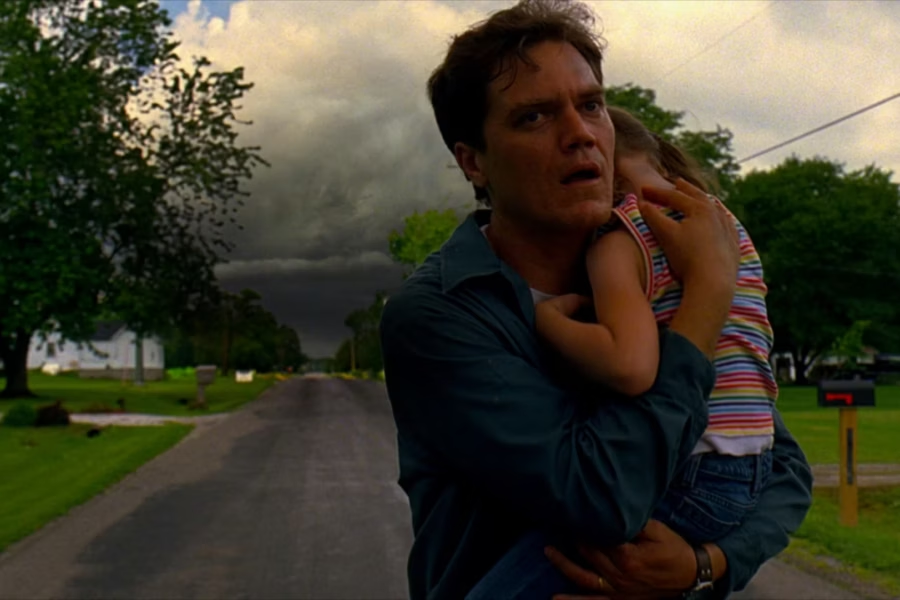
Take Shelter (2011)
Michael Shannon delivers an unforgettable performance grounded in fear and uncertainty.
Rubber (2010)
A sentient tire wreaks havoc—absurd and philosophical in equal measure.
The House of the Devil (2009)
Retro vibes and creeping dread define this occult-tinged thriller.
The 1980s are often remembered for neon aesthetics, synth-heavy soundtracks, and larger-than-life heroes, but beneath that glossy surface lay a darker cinematic undercurrent. Filmmakers were increasingly drawn to bleak futures shaped by authoritarian control, technological overreach, and collapsing social systems. These films didn’t just entertain; they warned. Long before modern audiences embraced bleak speculative storytelling, dystopian movies of the ’80s were already dissecting power, surveillance, identity, and dehumanization with startling clarity.
Many of these films were misunderstood or underappreciated on release, yet today they’re frequently cited alongside the bestscience fiction moviesof all time for their prescience and thematic depth.
Below are ten dystopian classics from the 1980s that were truly ahead of their era.
Why Dystopian Movies of the 80s Still Feel Uncomfortably Relevant
1. Blade Runner (1982)
Ridley Scott’s Blade Runner redefined cinematic futurism. Its rain-soaked megacities, corporate dominance, and moral ambiguity challenged audiences to question what it means to be human. The replicants’ existential struggle feels eerily relevant in today’s AI-driven world, making this film a cornerstone of dystopian cinema.
2. Brazil (1985)
Terry Gilliam’s Brazil is a nightmarish satire of bureaucracy run amok. Paperwork becomes a weapon, individuality is crushed by systems, and incompetence thrives at the highest levels. Its absurdity masks a terrifying truth about how easily freedom can be lost to red tape and apathy—one of the clearest examples of dystopian movies predicting real-world dysfunction.
3. RoboCop (1987)
Paul Verhoeven’s RoboCop is far more than a violent action film. It’s a biting critique of corporate greed, privatization, and media manipulation. Set in a crime-ridden Detroit owned by corporations, the film foresaw the commodification of public services and the erosion of human dignity.
4. The Terminator (1984)
James Cameron’s low-budget juggernaut introduced a future ruled by machines and endless war. The idea of technology turning against humanity felt extreme in the ’80s, but today, debates around autonomous weapons and AI ethics make The Terminator disturbingly prophetic and essential viewing.
5. Akira (1988)
Katsuhiro Otomo’s anime masterpiece envisioned Neo-Tokyo as a city simmering with political unrest, youth rebellion, and government experimentation. Its themes of uncontrolled power, societal decay, and authoritarian fear place it firmly among the best science fiction movies of all time, regardless of medium or era.
6. Escape from New York (1981)
John Carpenter’s cult classic imagines Manhattan transformed into a maximum-security prison. The film’s bleak outlook on crime, punishment, and political leadership reflects deep distrust in institutions—a sentiment that continues to resonate decades later.
7. Mad Max 2: The Road Warrior (1981)
While the original Mad Max hinted at societal collapse, The Road Warrior fully embraced post-apocalyptic dystopia. Fuel scarcity, tribal violence, and survivalist ethics dominate a world where civilization has crumbled. Its influence can be seen in countless films and video games that followed.
8. Videodrome (1983)
David Cronenberg’s Videodrome explores media addiction and body horror in a way that was shocking at the time. Its central idea—that media can reshape reality and identity—feels uncannily accurate in an age of algorithm-driven content and digital manipulation, reinforcing the lasting power of dystopian movies as social commentary.
9. 1984 (1984)
Based on George Orwell’s seminal novel, this adaptation captures the suffocating atmosphere of constant surveillance and psychological control. Released during the Cold War, its depiction of propaganda and state control remains chillingly relevant in the modern information age.
10. They Live (1988)
Another John Carpenter entry, They Live disguises a sharp critique of consumerism and class inequality beneath sci-fi action trappings. Its famous “OBEY” imagery and subliminal messaging concept anticipated modern concerns about advertising, media control, and mass complacency.
Conclusion: The Enduring Legacy of 80s Dystopian Visionaries
What makes these films remarkable isn’t just their imaginative worlds, but their accuracy. The fears they expressed—unchecked technology, corporate dominance, state surveillance, and social alienation—are no longer speculative. Revisiting these dystopian movies today feels less like escapism and more like reflection. Their influence on modern cinema and storytelling secures their place alongside the best science fiction movies of all time, proving that the boldest warnings often come disguised as entertainment. The 1980s didn’t just imagine dark futures—they saw them coming.
The 1980s were a defining decade for pop culture, and 80s moviesdelivered villains who were as memorable as the heroes they tormented. These antagonists weren’t just obstacles; they embodied social fears, unchecked ambition, and raw charisma, helping audiences decide who truly deserved the title of best villain. With bold performances, striking visual design, and quotable dialogue, the era’s bad guys continue to influence cinema today.
Already iconic by 1980, Darth Vader reached mythic status in The Empire Strikes Back. His towering presence, tragic backstory, and moral complexity turned him into a villain who was terrifying yet strangely sympathetic. Vader set the benchmark for cinematic antagonists in 80s movies, proving that evil could be both human and operatic.
2. Jack Torrance – The Shining (1980)
Jack Torrance is horror rooted in psychology. Watching an ordinary man descend into madness inside the Overlook Hotel is deeply unsettling. Jack Nicholson’s performance made this character a masterclass in controlled insanity and one of the most studied villain portrayals of the decade.
3. Emperor Palpatine – Return of the Jedi (1983)
If Vader was the fist, Palpatine was the mind. His manipulation, patience, and absolute devotion to power defined him as a villain who didn’t need physical dominance to inspire fear. His quiet confidence made every scene crackle with menace.
4. Alex DeLarge – A Clockwork Orange (1980 re-release popularity)
Alex DeLarge is charming, cruel, and disturbingly articulate. He represents violence stripped of justification, forcing viewers to confront uncomfortable questions about free will, morality, and control.
5. Clarence Boddicker – RoboCop (1987)
Sadistic and smug, Clarence Boddicker thrives on chaos. He’s not a mastermind but a brutal opportunist, and that realism makes him frightening. His casual cruelty reflects the gritty urban fears present in many 80s movies of the time.
6. Freddy Krueger – A Nightmare on Elm Street (1984)
Freddy Krueger reinvented horror villains by mixing terror with dark humor. Invading dreams, mocking his victims, and bending reality itself, Freddy became a cultural icon whose influence still echoes in modern horror.
7. Hans Gruber – Die Hard (1988)
Elegant, intelligent, and ruthlessly efficient, Hans Gruber elevated the action villain archetype. Alan Rickman’s refined performance helped redefine what audiences expected from antagonists, contributing to discussions about best villain actors in genre cinema.
8. The Joker – Batman (1989)
Tim Burton’s Batman introduced a Joker who was theatrical, unpredictable, and deadly. Jack Nicholson’s portrayal leaned into comic-book excess while grounding the character in genuine madness, making him unforgettable.
9. Nurse Ratched – One Flew Over the Cuckoo’s Nest (1980s resurgence)
Cold authority defines Nurse Ratched. Her villainy isn’t loud or violent but systematic and suffocating. She represents institutional oppression, proving that evil can be quiet and socially accepted.
10. Mr. Blonde – Reservoir Dogs (1980s indie rise)
Though technically released in the early 1990s, Mr. Blonde’s influence traces back to late-80s independent cinema. His casual brutality and infamous torture scene stand as one of the most chilling examples of best villain monologues delivered with unsettling calm.
11. Scar – The Lion King (1989 development era)
Scar’s Shakespearean jealousy and bitterness made him a standout animated villain. His intelligence and emotional manipulation showed that animation could deliver antagonists as layered as live-action films.
12. Predator – Predator (1987)
The Predator is a monster governed by honor and ritual. Its silence, advanced technology, and hunting code transformed it from a simple creature feature villain into a science-fiction legend.
13. Gordon Gekko – Wall Street (1987)
Gordon Gekko isn’t evil in a traditional sense, but his unapologetic greed and moral emptiness make him a villain of ideology. He represents excess, ambition, and the darker side of success glorified during the decade.
14. The Terminator – The Terminator (1984)
Relentless and emotionless, the Terminator introduced a new kind of antagonist: unstoppable technology. Its lack of empathy mirrored anxieties about machines and the future, a theme deeply rooted in 80s movies.
15. Frank Booth – Blue Velvet (1986)
Frank Booth is raw, volatile, and deeply disturbing. Dennis Hopper’s performance exposed a side of villainy that was chaotic and unpredictable, leaving audiences shaken long after the credits rolled.
Conclusion
The villains of the 1980s endure because they were more than narrative devices; they were reflections of cultural fears, personal obsessions, and moral conflicts. From supernatural horrors to corporate predators, 80s movies gave us antagonists who challenged heroes and audiences alike, making the debate over the best villain as alive today as it was decades ago.
In today’s fast-paced world, people are constantly searching for ways to calm their minds, improve focus, and reduce stress. Two practices that often come up in these conversations are meditation and mindfulness. Although meditation techniques and mindfulness are closely related, they are not the same. Many beginners feel confused about where one ends and the other begins.
To make things more confusing, both practices are often discussed together, sometimes with soothing aids like meditation music, making them seem interchangeable. However, understanding their differences can help you choose the practice that fits your lifestyle and mental needs best. Before diving deep, it’s important to know that meditation usually refer to structured practices, while mindfulness is more about a way of living and paying attention.
Meditation Techniques vs Mindfulness: A Simple Breakdown
At the most basic level, meditation and mindfulness serve the same goal: helping you become more aware and mentally balanced. The difference lies in how they help you get there.
Meditation is usually a formal practice. You set aside a specific time, sit or lie down in a particular posture, and focus your attention using a chosen method. Mindfulness, on the other hand, is an informal, moment-to-moment awareness that can be practiced anytime, anywhere.
Think of meditation as going to the gym to exercise your mind, while mindfulness is like maintaining good posture throughout the day. One is a scheduled activity; the other is a continuous habit.
What Is Meditation? Explained for Beginners
Meditation is an intentional practice where you focus your mind on one thing—such as your breath, a mantra, a visual image, or bodily sensations—to train attention and awareness. It has roots in ancient traditions like Buddhism, Hinduism, and Taoism, but today it is widely used for mental health, stress management, and emotional regulation.
Most meditation practices share a few common elements:
A quiet or comfortable environment
A specific object of focus
A non-judgmental attitude toward thoughts
A defined start and end time
People meditate for many reasons: to feel calmer, improve concentration, sleep better, or develop emotional stability. Some prefer silent meditation, while others use guided sessions or calming sounds. This is where meditation music often comes in, helping beginners relax and stay focused without feeling overwhelmed by silence.
What Is Mindfulness? Everyday Awareness Made Simple
Mindfulness is about being fully present in the current moment—without judging it as good or bad. It doesn’t require you to sit cross-legged or close your eyes. You can practice mindfulness while eating, walking, working, or even having a conversation.
A simple way to understand mindfulness is to notice what you’re doing while you’re doing it. For example:
Feeling the warmth of your tea as you drink it
Noticing your breath while waiting in traffic
Paying full attention when someone speaks to you
This leads many people to ask, what is mindfulness meditation, since the term appears frequently in wellness content. In simple words, it refers to a meditation practice that trains you to be mindful—but mindfulness itself extends far beyond formal meditation sessions.
Key Differences Between Meditation and Mindfulness
1. Structure vs Spontaneity
Meditation techniques are structured. You usually choose a place, time, and method. Mindfulness is spontaneous and flexible. You can practice it in the middle of daily activities without stopping what you’re doing.
2. Time Commitment
Meditation often requires dedicated time—anywhere from 5 minutes to an hour. Mindfulness doesn’t demand extra time; it simply changes how you use your attention during existing moments.
3. Goal Orientation
Meditation often has a specific goal, such as relaxation, clarity, or emotional healing. Mindfulness is less about achieving a result and more about observing what is happening right now.
4. Effort Level
Meditation requires intentional effort, especially in the beginning. Mindfulness feels lighter, as it gently reminds you to return to the present whenever your mind wanders.
How Meditation and Mindfulness Work Together
Although they are different, meditation and mindfulness complement each other beautifully. Meditation strengthens your ability to focus, while mindfulness helps you apply that focus in real life.
For example, practicing breathing meditation regularly can make it easier to stay calm during stressful situations. Over time, the awareness developed during meditation naturally spills into daily life. This is why many teachers say meditation builds the foundation, and mindfulness is how you live on that foundation.
This connection also explains why people searching for what is mindfulness meditation often discover that it acts as a bridge between formal meditation sessions and everyday awareness.
Types of Meditation and Where Mindfulness Fits In
There are many styles of meditation, including:
Focused attention meditation
Loving-kindness meditation
Body scan meditation
Visualization practices
Some of these practices emphasize concentration, while others emphasize awareness. Mindfulness-based practices fall into the second category. Unlike other meditation techniques that focus on a single object, mindfulness meditation encourages observing thoughts, emotions, and sensations as they arise—without trying to change them.
This makes mindfulness particularly useful for people dealing with anxiety, overthinking, or emotional overwhelm, as it teaches acceptance rather than control.
Which One Should You Choose?
The choice between meditation and mindfulness depends on your lifestyle and personality.
If you like routines and structured practices, meditation may suit you better.
If you struggle to find time but want mental clarity, mindfulness may be easier to start with.
If possible, combining both offers the best results.
For beginners, starting with short meditation sessions and gradually incorporating mindfulness into daily activities creates a balanced and sustainable approach.
Scientific Perspective: What Research Says
Modern science supports both practices. Studies show that meditation can reduce stress, improve focus, and enhance emotional regulation. Mindfulness has been linked to reduced anxiety, better emotional awareness, and improved mental resilience.
Brain imaging studies reveal that regular meditation can change brain areas related to attention and emotional control. Mindfulness practices help people respond rather than react, which is particularly beneficial in high-stress environments.
Common Myths About Meditation and Mindfulness
One common myth is that meditation requires stopping thoughts completely. In reality, thoughts will always arise; the goal is to notice them without getting lost in them. Another myth is that mindfulness is passive or lazy. In fact, it requires consistent awareness and mental discipline.
Some people also believe you must choose one over the other. The truth is that they are two sides of the same coin—each strengthening the other over time.
Final Thoughts: Meditation or Mindfulness—Why Not Both?
Meditation and mindfulness are not competing practices; they are complementary tools for mental well-being. Meditation offers a focused space to train the mind, while mindfulness teaches you how to use that training in everyday life. Together, they help create balance, clarity, and emotional stability.
If you enjoy structured practices, exploring meditation techniques can deepen your inner awareness. If you prefer simplicity, mindfulness allows you to stay grounded in daily moments. Many people find that adding meditation music enhances relaxation and makes both practices more enjoyable and sustainable in the long run.
Ultimately, the best practice is the one you can maintain consistently—because mental peace is not built in a day, but in small moments of awareness repeated over time.
If you are a gaming enthusiast searching for the ultimate list of titles that redefine immersive gameplay, world-building excellence, and unforgettable character depth, you’re in the right place. The sony playstation has delivered some of the most iconic gaming experiences in the industry, shaping the future of adventure, storytelling, and competitive gaming. From narrative-rich single-player campaigns to chaotic multiplayer showdowns, these 15 titles represent some of the finest creations available today. Whether you prefer action, fantasy, or realistic survival-themed games, this collection offers a bit of everything. Many of these titles are frequently featured in community picks and discounted selections similar to playstation plus monthly games, making them more accessible to players looking to expand their library.
A groundbreaking emotional drama, The Last of Us Part II is widely considered a masterpiece in storytelling. The game pushes boundaries with cinematic visuals, intense stealth mechanics, and a morally complex narrative that challenges the player’s perspective. It is unforgettable from beginning to end.
This reinvented title takes Kratos from Greek mythology into the realm of Norse gods. The relationship between Kratos and Atreus, blended with visceral combat and breathtaking visuals, makes it one of the most beloved games ever crafted.
Set in feudal Japan, this visually stunning open-world samurai adventure captures the beauty and brutality of war. With unforgettable sword fights, a captivating story, and photo-mode perfection, Ghost of Tsushima remains a fan favorite.
Swinging across New York City has never felt more alive. Marvel’s superhero Spider-Man delivers fluid gameplay, intense action, and emotional storytelling that resonates with both comic fans and casual players alike. The game is packed with heart and cinematic brilliance.
Nathan Drake’s final adventure is an epic blend of treasure-hunting exploration, gunplay, and cinematic sequences that redefine the term “blockbuster game.” It remains one of the strongest exclusive titles and a must-play experience.
Aloy returns with spectacular new robotic creatures, vast biomes, and evolutionary gameplay mechanics. This sequel raises the bar for open-world design and creative combat, making it one of the most polished titles on the platform.
The critically acclaimed action RPG combines brutal difficulty with an expansive open world and unparalleled freedom. Players forge their own paths through dark fantasy landscapes, facing fearsome bosses and unraveling cryptic lore.
Known for its gothic horror aesthetic and intense combat system, Bloodborne is a rewarding challenge for hardcore gamers. Its atmospheric setting and adrenaline-pumping fights keep players returning for more.
A stunning epic set in the dying days of the Wild West, the game features breathtaking realism, a moving story, and unmatched attention to detail. It is more than a game—it’s a cinematic journey.
A nostalgic yet modern reimagining of a beloved classic, this game delivers a perfect combination of action combat, emotional storytelling, and visually impressive world-building.
This visually stylish JRPG blends teenage life with supernatural battles, presenting a message-rich story and deeply engaging character arcs. Its turn-based combat and unforgettable art design make it stand out.
A dream title for car enthusiasts, offering realistic driving mechanics, a huge lineup of vehicles, and visually true-to-life tracks. The game sets standards in simulation racing.
Football fans rejoice—FIFA 24 continues to dominate with improved mechanics, realistic graphics, and competitive multiplayer options. Whether casually playing or building your ultimate team, it offers thrilling match experiences.
The latest entry reinvents the iconic fighting franchise with stunning visuals, brutal finishing moves, and powerful character redesigns. A must-have for fans of competitive fighting.
A Viking-themed open-world epic filled with combat, raids, exploration, and beautiful landscapes. Valhalla remains a massive adventure rich with lore and memorable gameplay.
Why These Titles Define the Best of sony playstation Gaming
These games showcase the evolution of modern gaming across genres—from deeply emotional narratives and cinematic masterpieces to online multiplayer insanity. The rise of exclusive titles and cutting-edge hardware powered by the gaming ecosystem ensures that players discover new favorites each year.
The library continues to grow rapidly thanks to expanding digital storefronts, remastered classics, cross-platform capabilities, and services that offer rotating selections similar to playstation plus monthly games. As technology continues to evolve, console gaming takes bigger leaps in innovation, realism, and storytelling depth, making this platform one of the strongest in the world of home entertainment.
Among gamers, performance stability, controller ergonomics, and exclusive game quality have made sony playstation titles global favorites throughout generations. Their immersive experiences and unforgettable narratives keep players engaged for hundreds of hours, offering endless value for both casual and competitive gamers.
Online communities, esports events, and content creators continue to celebrate the power of this platform. Many of these games receive constant updates, expansions, DLCs, and improved visuals, ensuring impressive longevity. Whether you are upgrading your console or exploring digital libraries, the experience remains breathtaking.
Looking ahead, the next few years promise even more groundbreaking adventures. With developers pushing boundaries, future launches will shape entertainment culture across the world. Whatever genre you may love, there is always something new waiting to be played.
Conclusion
If you’re looking to build a powerful gaming library with unforgettable AAA experiences, this list should serve as the perfect guide for selecting your next epic adventure. From emotionally intense stories to strategic battles and high-speed racing titles, these masterpieces represent the shining excellence of sony playstation and what makes it a beloved console among millions of gamers globally. With evolving game libraries and exciting offers like playstation plus monthly games, there has never been a better time to dive into extraordinary virtual worlds. Get ready to power up the controller, explore new universes, and rediscover why gaming has become one of the greatest modern art forms.
Choosing the right smartphone today can be overwhelming because the market is flooded with feature-rich devices across different price segments. From display technologies and camera systems to processors and battery performance, each model promises something special. For budget-conscious buyers, finding the best smartphone under 20000 can feel like a complicated puzzle—especially with brands launching newer versions every few months. Similarly, if you are looking for a reliable mobile phone under 20000, it requires understanding what features matter most based on personal usage rather than flashy marketing.
Before comparing brands or checking online deals for the best smartphone under 20000, define what you expect from your new phone. Are you a heavy gamer? Do you click professional-grade photos? Do you need long battery life for travel or work? A buyer who values performance will prioritize the processor and RAM capacity, while a photography-focused user will care more about camera hardware and software optimization. Students or everyday users might want a balanced model with strong battery endurance and fast charging.
Screen Size: A 6.5-inch display or larger is ideal for movies, reading, and gaming, but compact options may feel more comfortable for one-hand use.
Refresh Rate: A minimum 90Hz display provides smooth scrolling and gaming performance, while 120Hz offers flagship-level fluidity.
Display Type: AMOLED screens deliver deeper blacks, better contrast ratios, and are more power-efficient than LCD.
Build quality is equally important. Look for Gorilla Glass protection, aluminum frames, or polycarbonate bodies with textured finishes that resist scratches and fingerprints.
Performance determines how well a phone can multitask, game, and run heavy applications. Chipsets from Qualcomm, MediaTek, and Samsung Exynos offer different strengths. While flagship processors may not be available in every budget segment, modern mid-range chipsets consistently deliver strong results. When researching the best smartphone under 20000, pay attention to real-world benchmark tests, not just raw specifications. Higher CPU and GPU efficiency means smoother app switching, less heating, and better performance over time.
More RAM and storage also improve efficiency. For most users, 6GB to 8GB RAM is ideal, with 128GB storage becoming a new standard. If you store lots of photos or media files, look for microSD expansion options.
Focus on Camera Capabilities Beyond Megapixels
Redmi 13 5G Prime Edition | 108MP Pro Grade Camera
Camera systems are heavily advertised, but megapixel numbers alone do not determine quality. Consider:
Sensor type and aperture size
Optical Image Stabilization (OIS)
Night mode capabilities
AI optimization
Video stabilization and 4K recording options
A triple camera or quad-camera setup may look impressive but does not always translate to better images. Instead, check sample photos, user reviews, and professional comparisons for clarity, color accuracy, and stabilization. If photography is your priority, mid-range phones now offer features previously seen only in flagship models like portrait depth control, advanced HDR, and dedicated ultrawide lenses.
For many people who travel or work long hours away from charging points, battery performance becomes crucial. A minimum 5000mAh battery ensures full-day usage even with intensive tasks. Fast-charging support between 33W and 67W can significantly reduce downtime.
Self-heating control is also essential. A well-optimized power consumption system improves battery longevity and keeps the device safe from overheating issues.
5G Connectivity, Software Updates, and Future Proofing
5G support is becoming a standard expectation in mid-range smartphones. While full 5G coverage is still growing worldwide, investing in a 5G-ready device ensures longer relevance. Additionally, software updates also affect lifecycle performance. Phones offering two to three years of system updates and security patches provide better long-term value.
When planning to buy the best smartphone under 20000, also analyze after-sales service quality, service center reach, and brand reputation. These factors matter significantly in long-term ownership experience and repair convenience.
In this price segment, many buyers search for a mobile phone under 20000 that delivers balanced performance rather than one specialized in only a single aspect. Carefully comparing processor efficiency, camera software, display technology, and battery durability ensures you get premium value even in a mid-budget purchase.
Conclusion
Buying a smartphone requires more than comparing discount prices or trending advertisements. The right device should match your usage habits and remain reliable for years. By focusing on display performance, processor strength, camera results, software reliability, and real-world reviews, you can confidently choose the best smartphone under 20000 that fits your needs.
The rapid acceleration of artificial intelligence has ignited a wave of speculation, competition and existential concern, but according to Jensen Huang, one of the most influential voices in modern technology, the world is misunderstanding what this race truly looks like. In a wide-reaching conversation on The Joe Rogan Experience, Huang explained that the competition to shape AI’s future will not end with a single dramatic victory moment. Instead, he believes progress will unfold through continuous breakthroughs that accumulate quietly but powerfully over time—a perspective that has become central to discussions in nvidia ai news today and the global debate on technological leadership.
Huang drew comparisons between the current AI landscape and past eras defined by technological urgency, including the World War II arms race and Cold War defense innovation, but emphasized that AI moves at a far faster and more fluid pace. Rather than a grand finale, we are living through an era of relentless, compounding advancement.
HowJensen Huang Sees the Shape of the AI Future
During the interview, Huang argued that society tends to frame major innovations through the lens of dramatic historical turning points, imagining a definitive before-and-after moment—like the detonation of the first atomic bomb or the launch of Sputnik. Yet the modern AI race is different. The transformation occurring today is often invisible until hindsight reveals how profoundly life has changed. Technological revolutions do not always announce themselves with spectacle; many unfold quietly, woven into the fabric of everyday experience.
Huang pointed out that the capabilities of AI models have increased nearly one hundredfold within just the past two years. That pace of advancement is unprecedented, and even experts struggle to track the speed with which training efficiency, model scale and deployment capacity are evolving. He referenced a growing concern among researchers and policymakers that as AI becomes more autonomous—able to analyze complex data, make strategic decisions and operate critical systems—the potential risk grows if safety, oversight and long-term governance do not keep up.
Innovation and AI
Jensen Huang insisted that much of today’s progress is being directed precisely toward solving those questions. In his view, safety is no longer a secondary step but the primary driver of innovation. Systems are becoming more reliable, more interpretable and more aligned with human values. Rather than spiraling out of control, he argued, the field is maturing—moving from unpredictable experimentation to structured engineering. Critics fear a runaway technological spiral, but Huang countered that AI is becoming “more useful and less error-prone,” suggesting that the future of AI may be more stable and manageable than apocalyptic narratives imply.
He also addressed the controversial issue of military involvement in AI research. For many, the idea of defense agencies advancing AI systems evokes dystopian fears of autonomous weapons or state-powered machine decision-making. However, Huang offered a different perspective: government participation, particularly in national security, could create accountability rather than chaos. AI will inevitably shape defense strategy, he said, and the absence of formal oversight might open the door to dangerous development by unregulated organizations. Transparent military participation ensures that ethical frameworks, legal boundaries and public interest are part of the conversation. In that context, defense development becomes a safeguard, not a threat.
Throughout the conversation, Joe Rogan raised common anxieties that echo through popular culture: Will AI surpass human judgment? Could quantum computing render global encryption useless overnight? Might machine reasoning outrun human ethics? Huang rejected the more catastrophic visions and stressed that AI will remain “a click ahead,” meaning humans will always be close enough to monitor and direct progress. History is full of moments when society panicked over unfamiliar innovations—from electricity to radio to the internet—yet every time, regulations and cultural norms evolved to create balance. Fear, he suggested, is a constant companion of progress but rarely an accurate predictor of outcomes.
Impact of AI on Humans
He also envisioned a future where AI becomes so deeply embedded that people stop thinking about it altogether. Instead of a conscious entity, it will operate like electrical power—essential, invisible and dependable. In healthcare, AI may enable personalized diagnosis and treatment designed around genetic, behavioral and imaging data. In transportation, autonomous systems could dramatically reduce accidents and reshape mobility. In education, adaptive learning could tailor instruction to every student. In emergency response, AI could triage crises faster than human teams. The revolution may be less about robots replacing people and more about augmenting human capacity in ways that seem almost ordinary over time.
Significantly, Jensen Huang argued that no single nation or corporation will “win” AI. The idea of a final victory misunderstands how infrastructure technologies evolve. Global platforms such as electricity, telecommunications or the internet did not crown a lone champion; they dispersed across economies, industries and cultures. Innovation strengthens through collaboration and competition—not conquest. The race will not end in a finishing line photo; instead, it will continue indefinitely, shaping the world in layers too subtle for daily notice.
Conclusion: A Future Built on Shared Progress
Ultimately, Jensen Huang believes the future of AI will be defined not by dramatic domination but by quiet integration. Rather than a conquering superintelligence, AI will become a fundamental computing layer powering healthcare, transportation, research, security and everyday tools—largely unnoticed unless it fails. There will be no grand clash where one system or one country emerges triumphant. The real story, reflected in much of nvidia ai news today, is about collaboration, regulation and sustainable progress that supports humanity rather than threatening it. The race will continue indefinitely—not to crown a victor, but to ensure that future generations inherit technology that is stable, trustworthy and profoundly beneficial.


 From gritty character studies to tense whodunits, we pay special attention to 10 psychological thriller movies as the heartbeat of this genre exploration, and we also touch on the allure of murder mystery movies that keep our detective instincts sharp.